Pain-free root canal treatment with modern rotary technology to save your natural tooth safely — no need to fear the phrase "root canal" anymore.
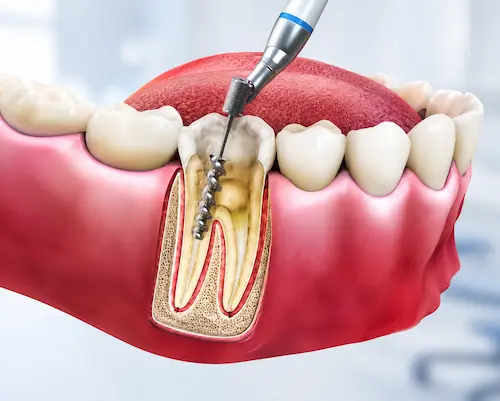
When decay or injury reaches the soft pulp at the centre of a tooth, it becomes infected and painful — and the tooth cannot heal on its own. Root canal treatment removes the infected pulp, thoroughly cleans and disinfects the inner canals, and seals the space, allowing you to keep your natural tooth instead of losing it to extraction.
Using modern rotary instruments, we make the procedure faster, more precise and significantly more comfortable than the outdated reputation root canals still carry.
Preserves full chewing strength and natural appearance.
Removes the source of pain and prevents it from spreading.
Faster, more precise cleaning of root canals than manual methods.
Keeping the tooth avoids the jawbone shrinkage that follows extraction.
Confirms infection depth and the exact root canal structure.
Local anesthesia, then a small opening is made to reach the pulp.
Infected pulp is removed and canals are thoroughly disinfected.
Canals are sealed and a crown is placed to protect the tooth long-term.
No — this is the biggest myth about RCT. With modern anesthesia and rotary tools, the procedure itself is no more uncomfortable than a filling.
Most cases are completed in 1–2 visits, followed by a separate visit to fit the permanent crown once the tooth has settled.
In most cases, yes — a root-treated tooth becomes more brittle, and a crown protects it from cracking under normal chewing force.