Restore damaged teeth with high-quality fillings that stop decay in its tracks and prevent it from spreading further.
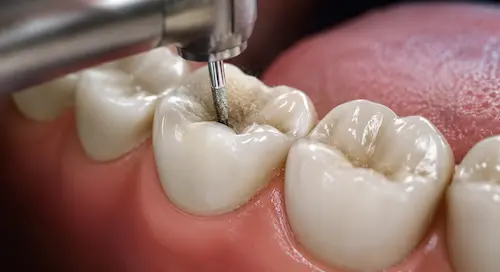
A cavity is permanent damage caused by bacteria breaking down tooth enamel. Left alone, it grows deeper — first reaching the sensitive dentin layer, then potentially the nerve, where it becomes a much bigger (and costlier) problem like a root canal or extraction.
A filling removes the decayed portion of the tooth and seals the space with a strong, tooth-coloured material — stopping the decay and restoring the tooth's shape and strength in a single visit.
Blends naturally with your tooth — our most common choice.
Releases fluoride — often used for children or root-area cavities.
Extremely durable — an option for back molars under heavy chewing load.
Most fillings are completed start-to-finish in one visit.
Visual check and X-ray to measure how deep the decay goes.
Local anesthesia applied so the area is completely comfortable.
The damaged portion of the tooth is carefully cleaned out.
The tooth is filled, shaped and polished to match your natural bite.
No — the area is fully numbed with local anesthesia before we begin, so you shouldn't feel pain during the procedure itself.
With good oral hygiene, composite fillings typically last 7–10 years, and can be replaced easily if they eventually wear down.
It will keep growing deeper, eventually reaching the nerve and requiring root canal treatment or extraction — a simple filling now avoids that.